
About us
We have been breeding horses for over 25 years. We began with PRE (Andalusian) and Lusitano horses. We now focus our breeding program the rare Highland pony and PRE horse.
We have been importing new lines of Highland ponies from Scotland for the last 8 years with emphasis on temperament, type, and movement. We stray away from breeding grey ponies due to melanoma; but would never turn down a heterozygous grey pony if it were the best available. All of our adult ponies are broken to ride and drive when they come of age. They can be used in any environment. We also still breed PRE (Andalusian) horses as we have for 30 years, and also an occasional Warlander.
Our love of the UK native breeds comes from years of travel and education in the UK. Our love of the Baroque frame of horses also made our love for these breeds very easy. When we first started researching Highland ponies in 1997 on my trip to the Perth stallion show. I had 2 guides around Scotland, Mr. Cameron Ormiston and Ms. Audrey Barron to introduce me to the breeders and take me on stud visits. When I finally found exactly what we were looking for, we began importing Highland ponies, the first Highland pony we imported was in 2017. Our last import of Highland ponies was in winter of 2021 when we imported 3 new ponies to the US. All with new bloodlines. Information regarding the Highland ponies can be found below.
We encourage anyone interested in the Highland pony, or PRE horse (Andalusian) to contact us via email or thru facebook: www.facebook.com/baroquefarm. We are willing to answer any inquiries or to mail out any information regarding our breeds. We also encourage anyone interested in our breeds to visit our links page for links to their home societies. Joining the home studbook societies gives you the best, most accurate information on the breed.
We have been importing new lines of Highland ponies from Scotland for the last 8 years with emphasis on temperament, type, and movement. We stray away from breeding grey ponies due to melanoma; but would never turn down a heterozygous grey pony if it were the best available. All of our adult ponies are broken to ride and drive when they come of age. They can be used in any environment. We also still breed PRE (Andalusian) horses as we have for 30 years, and also an occasional Warlander.
Our love of the UK native breeds comes from years of travel and education in the UK. Our love of the Baroque frame of horses also made our love for these breeds very easy. When we first started researching Highland ponies in 1997 on my trip to the Perth stallion show. I had 2 guides around Scotland, Mr. Cameron Ormiston and Ms. Audrey Barron to introduce me to the breeders and take me on stud visits. When I finally found exactly what we were looking for, we began importing Highland ponies, the first Highland pony we imported was in 2017. Our last import of Highland ponies was in winter of 2021 when we imported 3 new ponies to the US. All with new bloodlines. Information regarding the Highland ponies can be found below.
We encourage anyone interested in the Highland pony, or PRE horse (Andalusian) to contact us via email or thru facebook: www.facebook.com/baroquefarm. We are willing to answer any inquiries or to mail out any information regarding our breeds. We also encourage anyone interested in our breeds to visit our links page for links to their home societies. Joining the home studbook societies gives you the best, most accurate information on the breed.

Home of the Highland pony & PRE horse
Here at Baroque Farm, our primary goal is temperament. We want to breed horses that are suitable for any level of rider/owner. We have hand selected our horses in consideration of their bloodlines, type, and movement after making sure they have a great temperament to go along with all of the necessary requirements for good conformation.
Our main focus is our Highland ponies, but we bred Dales ponies for over 20 yrs though we only have two Dales left on the farm, so we are no longer producing Dales ponies. We have bred PRE (Andalusian) horses for 30 plus years, and have the occasional Warlander. We have traveled the world in search of the best bloodlines for our herd, and we take what we do seriously and with great pride.
When we looked into purchasing Highland ponies in 1997 we traveled to Scotland to the Perth Stallion show. We were unable to purchase the animals we liked, so we began breeding Dales ponies. It took us several years to find adequate Dales pony stock as well. We were lucky and found Dan who became a favorite everywhere he went. At one time we had 12 Dales broodmares, but we decided to thin our Dales herd in hopes of finding good, solid Highlands with new lines for the USA.
We imported our first 2 Highland ponies in 2017 when we acquired a yearling colt and filly. Since then we have imported several Highland ponies from different bloodlines, the last 3 came in November 2021. We are on our 7th year of breeding Highland ponies. We thoroughly enjoy working with this hardy,easy going, laid back breed, and willing breed. Our local vets and farriers love their demeanors as well.
Our ultimate goal in breeding the Highland pony is to continue to expand the gene pool here in the US while upgrading the quality of the ponies here in America. We have a very broad selection of bloodlines,and have tried to stay away from the lines already here in the US, and to encourage the diversification of the bloodlines here in the USA. All of our Highland ponies are broken to ride and drive as soon as they come of age. We DO NOT condone breaking in of ponies at 2 years old in any form. Not even just to sit on them. Highland ponies and Dales ponies take years to mature and should not be put to work until their 5th year. We have our ponies and horses lightly backed at 4 years for 6 weeks, in 15 to 20 min sessions, then turn them out for the remainder of that year to mature fully.
Temperament is the foremost quality we look for in our ponies. Conformation and movement are equally second. We prefer to stay away from the grey bloodlines due to melanoma, as continuing to breed grey to grey has increased the instances of malignant melanomas. We have used a heterozygous grey in our program, and we have kept colored offspring. But we will only breed heterozygous grey to ponies/horses of color to continue to try to remove melanoma from the lines as we can. We do not breed for a certain color, just color which does not include grey.
Our prefix is Lagniappe. Lagniappe is a phrase taken from our French origins in south Louisiana, a term that means " a little something extra". We try to breed and select ponies with that extra bit of something special. It is our desire to breed each of our equines, Highland pony, Dales pony, or PRE horses to be a little something more than average equine of their breed. We travel to determine what lines we like, and have an intricate computer program to keep bloodlines in check and keep the best pairings for the future.
We only sell our ponies to approved, vetted homes. We have learned a lot in the horse business, and to us it is more important to us to have ponies with forever homes rather than show homes, or to be passed from one person to another. We love to talk ponies, and love to hear from people wanting to inquire or visit them.
Our Breeds
Highland Pony

If you are looking for a pony breed that embodies resilience, intelligence, and a gentle nature, the Highland pony is an excellent choice. Originating from the Scottish Highlands and Islands, this breed is one of the largest and most versatile of the mountain and moorland pony breeds found in the British Isles.
Known for their hardiness and adaptability to harsh climatic conditions, Highland ponies have been a staple in Scottish agriculture and culture for centuries. With their well-balanced and compact bodies, kindly eyes, and broad muzzles, these ponies are not only aesthetically pleasing but also highly functional. They are ideal for various roles such as riding, driving, and farm work.
The Highland Pony Society, dedicated to promoting and preserving this breed, ensures that the purity and characteristics of the Highland pony are maintained for future generations to enjoy.
Breed Characteristics:
Physical Traits
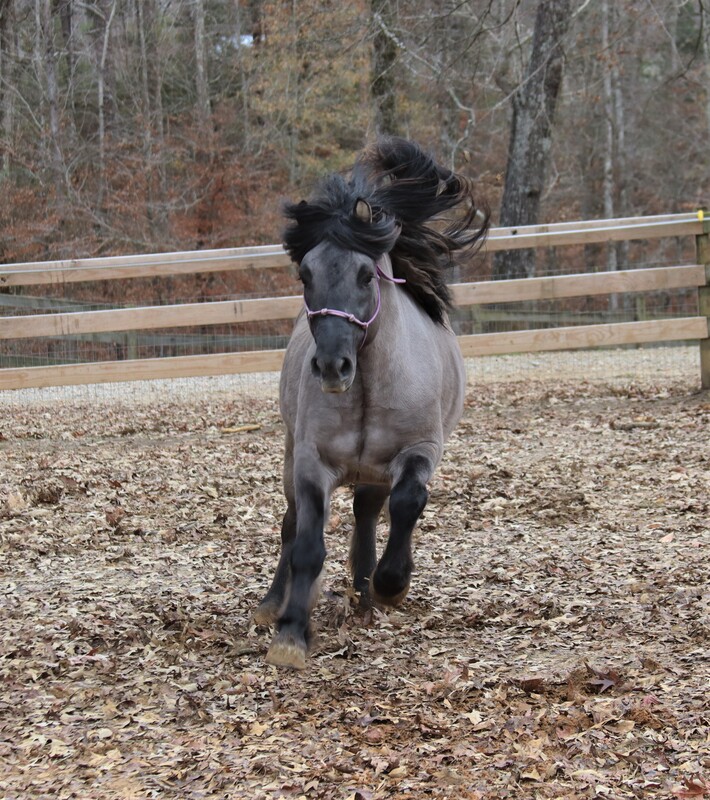
The Highland pony is known for its robust and well-proportioned physical traits. They stand between 13 and 14.2 hands high (52 to 58 inches or 132 to 147 cm) and can weigh up to 1,300 pounds. Despite their relatively small size, they are sturdy and capable of carrying heavy loads. Their head is well-carried and alert, featuring a broad muzzle, deep jowl, and kindly, large eyes that look well forward.
The neck is of reasonable length, leading to a good sloping shoulder and well-placed forearms. Their body is compact and well-balanced, with a deep chest providing ample room for the heart and lungs, and well-sprung ribs. The quarters are powerful, showcasing a well-developed thigh, strong second thigh, and clean, flat hocks.
Highland ponies have legs with flat, hard bone, broad knees, short cannon bones, and oblique pasterns, which contribute to their sure-footedness and ability to traverse rough terrain. They come in a variety of colors, including dun shades, grey, black, bay, and liver chestnut.
Dun-colored ponies often feature primitive markings such as a dorsal stripe and zebra-like stripes on their legs. White markings are generally discouraged, with only a small white star on the forehead being acceptable according to the breed standard.
Their coat is particularly adapted to the harsh Scottish climate, consisting of a thick winter coat with strong, badger-like hair over a soft, dense undercoat. This coat sheds in the spring to reveal a smooth summer coat.
Temperament
Highland ponies are celebrated for their calm, docile, and intelligent nature. Their steady and hardworking traits have made them invaluable in various roles throughout history.
These ponies are generally easy to handle and train, although their intelligence and strong will can make them somewhat stubborn if not properly guided. Their even temperament makes them an excellent choice for families and therapeutic riding programs.
Highland ponies are social animals that thrive on interaction and are known for their empathetic and gentle disposition.
Uses
Highland ponies have proven versatile due to their strength, stamina, and gentle nature. Historically, they were used as workhorses on small Scottish farms, hauling timber, game, and ploughing fields.
Today, they are enjoyed for a variety of activities, including riding, trekking, and driving. Their sure-footedness and endurance make them ideal for navigating rough and steep terrain, and they are often used for deer-stalking and other outdoor pursuits.
In addition to traditional roles, Highland ponies are popular as family ponies and are frequently used in therapeutic riding programs due to their calm and dependable nature. They are also natural jumpers and can be easily broken to harness, making them a versatile choice for a range of equestrian activities.
History
The Highland pony boasts a rich and storied history that spans centuries, deeply connected to the rugged and often unforgiving landscapes of the Scottish Highlands and Islands. While the exact origins remain a mystery, archaeological evidence indicates that ponies have been present in the British Isles since at least the late Pleistocene period—possibly even earlier, during the Ice Age or brought by prehistoric nomads.
Early Development
By the 6th century AD, during the Pictish period, ponies had already become an integral part of Scottish society. This is evident from stone carvings of the era that depict these hardy animals. Over time, the isolation of the highland glens and islands led to the emergence of distinct sub-types, such as the Islay, Rhum, Mull, and Barra strains. Each sub-type was uniquely adapted to the specific environmental conditions of its region, underscoring the breed's remarkable adaptability.
Influence of Other Breeds
The Highland pony's development was enriched by the introduction of other breeds into Scotland. In the 16th century, French and Spanish breeds, including the Percheron, were introduced, adding to the breed's genetic diversity.
Later, in the 1800s, Scottish ponies were crossed with British breeds like the Fell and Dales ponies, further shaping the Highland pony's distinctive characteristics.
Royal Patronage and Breeding Programs
The Highland pony received significant recognition and support from the British royal family. Queen Victoria initiated a strong connection between the royal family and the breed—a tradition continued by Queen Elizabeth II.
Queen Elizabeth's personal dedication to breeding and showcasing Highland ponies, alongside her patronage of the Highland Pony Society, was instrumental in promoting and preserving the breed. Additionally, large landowners, such as the Duke of Atholl, maintained substantial studs of pure-bred Highland ponies, further contributing to the breed's development and popularity.
Agricultural and Military Use
Historically, Highland ponies served as the universal workhorses of the Scottish highlands and islands. Their strength, stamina, and versatility made them invaluable for tasks such as hauling timber, transporting game, and plowing fields.
During wartime, these ponies were also in high demand for military purposes. They played important roles in units like the Scottish Horse and the Lovat Scouts, showcasing their reliability and endurance in challenging conditions.
Modern Conservation Efforts
In the late 19th and early 20th centuries, significant efforts were made to improve the Highland pony for agricultural purposes. The Department of Agriculture for Scotland established the 'Faillie' Stud in Skye, which was later relocated to Inverness and renamed Knocknagael.
Although the stud was closed in 1977 due to government budget cuts, its valuable stock was purchased by dedicated breeders, ensuring the continuation of high-quality breeding programs. Today, the Highland Pony Society plays a vital role in preserving the breed's integrity and actively promoting its conservation.
Role in Conservation and Culture
Conservation Efforts
Highland ponies play a significant role in modern conservation efforts, particularly in the realm of conservation grazing. Their selective grazing habits create a mosaic of vegetation, with areas of shorter, grazed patches alongside taller, undisturbed vegetation. This approach benefits a wide range of species, including invertebrates, small mammals, and birds.
By favoring long grass over flowering plants, Highland ponies allow flowering plants to gain a competitive advantage, providing essential nectar for pollinators. At sites like the Montrose Basin Nature Reserve, Highland ponies are used to manage habitats effectively. For example, Inga and Blossom, two Highland ponies introduced to the reserve, have demonstrated the positive impact of using native breeds for conservation grazing.
Their grazing habits help maintain a balanced ecosystem, slowing down scrub encroachment and promoting biodiversity. Highland ponies are also adaptable to various habitats and can thrive on rough grazing, making them ideal for extensive conservation sites. They consume reeds, rushes, and other vegetation that might otherwise dominate certain areas, thus maintaining ecological balance.
Cultural Significance
The Highland pony holds a special place in Scottish culture and history. Originally bred to work on small farms in the Scottish Highlands, these ponies were essential for tasks such as hauling timber, game, and plowing fields.
Their strength, stamina, and gentle nature made them invaluable to local communities. The breed has also been closely associated with the British royal family, particularly Queen Elizabeth II, who maintained a large working stud of Highland ponies. Her patronage and breeding efforts helped raise the profile of the breed and contributed significantly to its conservation.
The Queen's involvement highlighted the importance of preserving heritage breeds and their role in both agricultural and cultural contexts. In addition to their practical uses, Highland ponies have been integral to Scottish traditions and sporting activities.
They are still used in deer stalking and other sporting pursuits, showcasing their versatility and endurance. Their presence in cultural events and exhibitions continues to celebrate their heritage and the unique bond between these ponies and the Scottish landscape.
ConclusionThe Highland pony stands as a testament to the resilience and adaptability of native Scottish breeds. With their well-balanced and compact bodies, kindly nature, and even temperament, these ponies have proven invaluable in a variety of roles, from traditional agricultural work to modern-day riding and trekking. Their hardiness, economical upkeep, and ability to thrive in harsh climates make them an excellent choice for many equestrian pursuits.
As a breed categorized as "at risk" by the Rare Breeds Survival Trust, it is vital for pony enthusiasts and breeders to actively support conservation efforts. By appreciating and preserving the Highland pony, we not only honor their rich history but also ensure their continued presence in our cultural and natural landscapes. If you are considering bringing a Highland pony into your life, remember their unique needs, such as a low-starch, forage-based diet, and the importance of proper training to bring out their best qualities.
Join the community of Highland pony enthusiasts and contribute to the preservation of this remarkable breed.
** All of our Highlands are registered by the HPS in Scotland. **
The Dales Pony

The Dales Pony is a critically rare breed native to the Northeast of England in Yorksire. The Dales pony is listed as critically endangered by the Rare Breeds Survival Trust. Originally bred to carry lead from the mines to the shores to be sold. They were also used around the small farms to plow, carry hay to other livestock up in the hills, etc. Today, they are used for riding and driving. They have very good movement, very powerfully moving off of all 4 limbs. They have a powerful drive from their hind ends. The Dales pony is a lively breed, forward pony, very striking to the eye in looks and motion. The Dales pony is better suited for the larger, or more experienced child, but and most adults. The Dales ponies comes in a variety of colour to include black, bay, grey, bay roan, and blue roan.
Known as the " Great Allrounder", the Dales is used for many jobs today. They are used for driving, dressage, mountain and moorland classes, hacking, jumping, and even timber removal (called snigging).
Our Dales pony stallion, Thornville Dan was imported a coming yearling. He is well known in the US as he has traveled all over the US as a Dales ambassador. Today, Dan is retired, breeding a couple of mares a year, and spending time relaxing and enjoying his older years.
** WE are NO LONGER breeding Dales ponies. Our 2 remaining Dales are retired.
** All of our ponies are registered with the Dales Pony Society in the UK.
There is a link below for the Dales Pony Society, UK. They are the premier source of Dales info.

PRE (Andalusian) Horse
The PRE (Pura Raza Espanol) aka Andalusian, is the " Royal Horse of Europe". It was a breed used by the knights and Kings of Europe. It is the foundation of MANY breeds today both in the US, and around the world. We have had PRE horses for 25+ years. The Spanish horse is an athletic, forward moving horses that adores their owners, and excels in many disciplines. They are fantastic with great temperaments, and today, they are the horses of movies as well as dressage, cross country, driving, and they are still used in the bullrings of Spain.
The Pura Raza Española (PRE), or Spanish horse, emerged during the Middle Ages, bred for both strength and elegance, and are known for their athleticism and beauty. Their history is intertwined with Spanish culture and their use in war, and they are now recognized for their versatility in various equestrian disciplines.
Here's a more detailed look at the PRE horse history:
** All of our PRE horses are registered with ANCCE in Spain
The Pura Raza Española (PRE), or Spanish horse, emerged during the Middle Ages, bred for both strength and elegance, and are known for their athleticism and beauty. Their history is intertwined with Spanish culture and their use in war, and they are now recognized for their versatility in various equestrian disciplines.
Here's a more detailed look at the PRE horse history:
- Origins:
The PRE breed's roots lie in the Iberian Peninsula and its history is closely tied to the Spanish culture, particularly during the Middle Ages. - Purpose:
The nobility sought both strong, athletic horses for war and elegant, beautiful ones for display and riding, leading to the development of the PRE breed. - Andalusian Influence:
The PRE breed is also known as the Andalusian horse, reflecting its origins in the Andalusian region of Spain. - Modern PRE:
- The PRE horses we know today are the result of centuries of selective breeding, focusing on specific traits like athleticism, temperament, and beauty.
- Versatility:
PRE horses are known for their versatility and are used in various equestrian disciplines, including dressage, jumping, and working with cattle. - Genetic Preservation:
The ANCCE (Asociación Nacional de Criadores de Caballos Pura Raza Española) plays a crucial role in preserving the breed's genetic purity through strict breeding programs and DNA sampling. - Global Presence:
PRE horses are bred and enjoyed worldwide, with organizations all over the world including Europe, Australia, South America, Central America, Great Britain, North America, and Asia. - The PRE is one of the world's most well-known breeds, known for their beauty, charisma, and on camera presents.
** All of our PRE horses are registered with ANCCE in Spain
Gallery of Photos


|



|


|


|
** ALL photos are copyright and cannot be used without written consent! ***


